Progress update for my Homestuck fan album review (and other posts)

At the end of my last blog post, I promised that I would review a Homestuck fan album that had come out a few days prior: that album is Fondly Regard Illustration, and that review still isn’t finished yet. But I’m pretty close now: I’ve reviewed 25 songs out of 32! It’s taken over two weeks because as it turns out, reviewing Homestuck fan music is a lot harder when a lot of the people who wrote these songs are interested in reading my blog post. I need to think of something interesting to say about each song and find a way to give constructive criticism to the ones I think are weak. But I can promise you, I’ll finish the post before I leave for my trip to Eurovision 2025 in Basel (which is on May 11). Probably at least a week before that, actually.

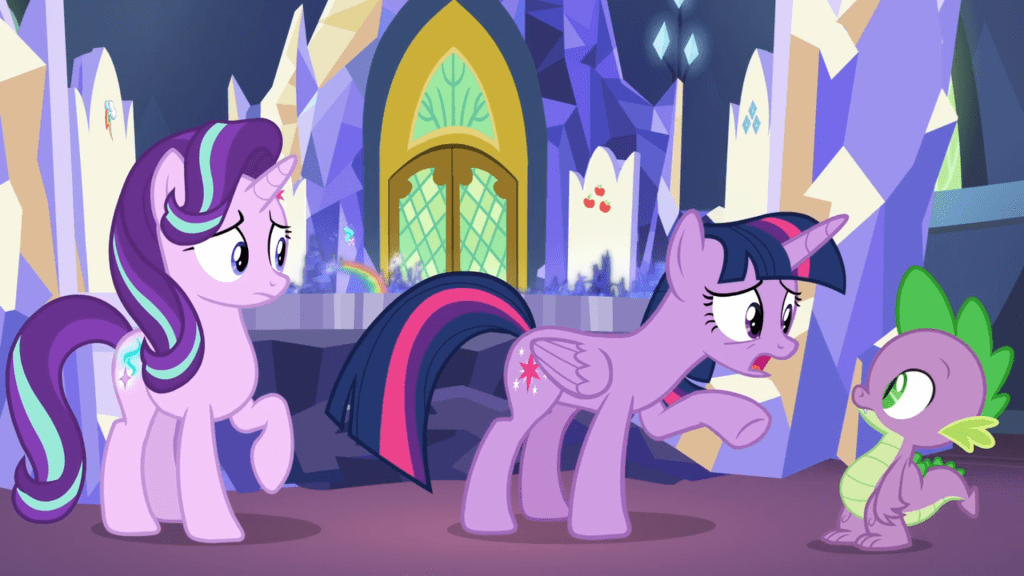
And after my Homestuck fan album review is finished, I will finish up my round 2 review of Eurovision 1967. I’ve been stalling on finishing it because I don’t want to be finished with that before my review of Fondly Regard Illustration. Then comes one more post I’ve been putting off finishing: my review of the MLP episodes “Not Asking for Trouble” and “Discordant Harmony”. I’ve already finished the first of those episodes, then the second I should be motivated to get done after I finish the Homestuck fan album blog post.

I’m excited to share my Homestuck fan album with whoever is interested in reading it. I would say “with you guys”, but a lot of people following my blog these days are here for the Eurovision posts.

Cookie Fonster Actually Revisits Eurovision 1966: The First Woman Not to Wear a Dress

Intro Post

< 1965 Review | 1966 Review | 1967 Review >


Introduction

My original review of 1966 was titled “Cookie Fonster Revisits Eurovision 1966”, which wasn’t entirely accurate because I was watching the year for the first time. Now that I am watching it for the second time, the old title is accurate, hence the title “Cookie Fonster Actually Revisits Eurovision 1966”.

We’re back in Luxembourg City, once again in the tiny Villa Louvigny, but this time the place is decorated much better. There’s a cute spiral staircase to the right of the stage and an elaborate chandelier behind the stage that looks nice in black and white. The presenter is different too: this time, her name is Josiane Shen, and she seemed to have a slightly bigger career than the last Luxembourgish host.

The lineup of countries was exactly the same as 1965, so once again we have 18 participant countries. Only two got zero points, and both are surprising ones: Monaco and Italy. In third place came a beautiful guitar tune from Norway, in second came a fun but bizarro jazzy waltz from Sweden, and in first place came Austria with an Udo Jürgens ballad. For him, third time was the charm! I should also mention that this was the first year where the EBU enforced a language rule, so it’s rather amusing that the winner had a few phrases in a different language thrown in.

I can’t find British commentary for this year, so I’ll watch with French commentary. François Deguelt commentated for France this year—he’s the singer of the wonderful “Ce soir-là”. He said at the start that he had to fill in for Pierre Tchernia who was unavailable and that he hoped he could comment the show in the same fashion.

I absolutely love the orchestral reprise of “Poupée de cire, poupée de son” at the start of the show and I’m pissed that rearranging the winner at the start of the show wasn’t done every year. Josiane gives us a short, no-nonsense introduction, then the first song begins.

Continue reading

Cookie Fonster Reevaluates Eurovision 1965: The Year That Gave Me a Headache

Intro Post

< 1964 Review | 1965 Review | 1966 Review >

Introduction

Since Gigliola Cinquetti won 1964 with her smash hit “Non ho l’età”, the next destination for Eurovision was Italy, who hosted the 1965 contest in the concert hall of their broadcaster RAI, located in Naples. After having seen the catastrophically bad hosting of Eurovision 1991, it gives me whiplash to see RAI put on a professional (if not particularly inspired) show with a host who’s fluent in three languages. Renata Mauro did most of the show in Italian, but as with the Danish host last year, she also gave a speech in French and English at the start, and had no trouble using those two languages in the voting. Her French sounds fluent with only a slight Italian accent, and her English is a surprisingly good imitation of Received Pronunciation.

While Eurovision 1991 makes up for the shit production by having an amazing lineup of songs, 1965 has the opposite problem: every song but one is a total piece of crap. Well OK, I’m exaggerating here, but it really is insane how much better the winner—“Poupée de cire, poupée de son” by France Gall—is than everything else. She was a French singer who competed for Luxembourg in Eurovision with a song I absolutely love, then went on to have a stellar career. In second place came the United Kingdom with “I Belong”, and in third came France with a song I hate with a passion, “N’avoue jamais”. I’m warning you now: if you like any song this year other than the winner, you probably won’t like my review of it.

The lineup of countries had two additions from 1964, making for 18 in total: Sweden returned with a controversial entry after skipping last year, and Ireland (who would soon become a 20th century powerhouse) made their debut. Crazy enough, this was the fourth year in a row with four zero-pointers. The good thing about ranking this year is, I already did it a few months back (which was a pretty miserable experience) so my job this time is easier. That’s assuming none of my rankings change.

I watched the contest with British commentary last time and I’ll do the same again, even though the French commentary is archived too. That’s because the video quality on the French-commentated uploads is pretty bad and I tend to enjoy British commentators more, even though I can understand both. Our old friend David Jacobs is back for the second last year, though it doesn’t look like his 1966 commentary has been archived, so for our purposes it’s our last time seeing him.

One more fact: this is the first Eurovision contest broadcast outside the EBU. As I said in round 1, it was also broadcast in Czechoslovakia, East Germany, Hungary, Poland, and the Soviet Union. Viewers in those countries would gradually long for the day they could join the Eurovision family.

Continue reading

Cookie Fonster Reassesses Eurovision 1964: A Winner I’ve Turned Around On

Intro Post

< 1963 Review | 1964 Review | 1965 Review >

Introduction

As of this writing, Eurovision 1964 is the oldest Eurovision to take place in a city I’ve been to: Copenhagen, the capital of Denmark. The show took place in the Tivoli Concert Hall, known in Danish as Tivolis Koncertsal. It’s hard to visit Malmö without also visiting Copenhagen, especially if you’re playing from abroad, and it’s a real beauty of a city. This couldn’t have been reflected much in the broadcast because it was in black and white, and fans aren’t able to see it today because nobody has been able to find the full video broadcast of Eurovision 1964. The reason why is that Denmark’s DR is one of few host brodacsters in the early years that didn’t save a copy of the show. At some point, DR wiped their video tape of Eurovision 1964 to make way for a different recording. The missing video broadcast is what the contest is best known for today. Well, that and the smash hit from Italy that won by a landslide, “Non ho l’età”.

Sixteen countries competed once again, but the lineup was different from the last three years: Sweden dropped out due to a strike and Portugal made their debut. Italy got first place as I said, the UK got a distant second, and Monaco scored third. Strangely enough, for the third year in a row, four countries got zero points, one of which was the newcomer Portugal. The voting system was changed from each jury awarding 5, 4, 3, 2, and 1 points to just 5, 3, and 1 points, and the headcount of each jury was reduced from 20 back to 10. The scoreboard was redesigned too: now it showed only country names without song titles, and had a horizontal bar graph to the right showing how many points each entry had.

Now back to the video footage problem: the only parts of the show that have surviving footage are the winner’s reprise and a few other snippets from the beginning and end of the show. Some of those snippets came from Denmark’s broadcaster DR, others from Finland’s Yle. This means we have small portions of the commentary from both countries, as well as audio of the French commentary. Over the past few years, fans have been making video reconstructions of the 1964 contest assembled from these snippets, as well as footage of contestants performing their songs in other shows. You can look at these YouTube uploads (1, 2, 3, 4) to see how the reconstruction has evolved over the years. Italy is lucky enough to have the winner’s reprise recorded. Portugal’s song has their national final performance archived, since RTP has preserved every single year of Festival da Canção. Not too surprising because FdC is Portugal’s pride and joy. Most other songs use a later video recording of the artist performing their song, but a few use footage of the artist performing a completely different song, which I don’t like because the lip movements don’t match the song.* For those songs I’d have preferred to just have photos, but I admire fans’ efforts to reconstruct the show regardless.

The show opens with a military march of some sort, which if the reconstruction is to be believed is interspersed with a video montage of Copenhagen. Then comes the presenter, Danish actress and TV presenter Lotte Wæver. She did most of the show in Danish (which I can understand much more of than last time), but graciously gave short speeches in English and French at the start. Fitting the increase in internationality of the hosting, the scoreboard had all the country names in English this time, instead of the local language. The reconstruction has the screen captions feature each country’s name in Danish, but I’m not sure if the show itself did that or not. I’ll watch the latest reconstruction I linked for this blog post. It’ll feel a lot like watching the music videos and national final performances of Eurovision 2020.

* As of this writing, those are the Netherlands, part of Norway, Denmark, Germany, and Spain. 11.5 out of 16 songs have a recording of the artist performing them, which is pretty damn good!

Continue reading

Cookie Fonster Reviews Every MLP Episode Part 82: A Royal Problem

Introduction / Navigation

< Part 81 | Part 82 | Part 83 >

Season 7, Episode 10

It’s been a while since my last MLP review, hasn’t it? While I’m unemployed I need something to do when bored, and working on my blog is one such thing. I wonder how much of this post series I can get done in 2025. Also, today is my 26th birthday!

And just to recap, I will no longer be releasing my MLP reviews only on Fridays, but instead on the day I finish them. I’ll continue having all of my posts cover either one or two episodes.


Season 7 Episode 10: A Royal Problem

In five words: Starlight swaps princesses’ cutie marks.

Premise: The Cutie Map sends Starlight Glimmer on a mission to Celestia and Luna’s castle because they haven’t been getting along as of late. To help them see eye to eye, she swaps the sisters’ cutie marks.

Detailed run-through:

It’s been over a year since I last reviewed a MLP episode, so forgive me if I struggle to get back into my groove. But I will try! The good thing, this is one of the fan favorite episodes of season 7.

To start the episode, the map sends Starlight Glimmer alone on a mission to Celestia and Luna’s castle. Twilight Sparkle responds with some good old Twilighting, doubled by her motherly treatment of Starlight.

Twilight Sparkle: Don’t worry. For all we know, it’s something small. Like, maybe the cooks are fighting over who has the best butternut squash soup. Or the royal hairdressers are fighting over a comb.
Spike: Or you know, maybe the royal sisters aren’t seeing eye-to-eye on something
Twilight Sparkle: NO! That’s just crazy. Luna and Celestia would never fight. … Again.

Thinking about it, it makes sense the map would send Starlight to solve this conflict for multiple reasons. It’s not just because of Starlight’s brash impulsiveness as the episode later discusses. The Mane 6 and Spike wouldn’t see the sisters’ conflict from an unbiased perspective, because Celestia knows them (especially Twilight) much better than Luna does. And the Cutie Mark Crusaders would be just as biased towards Luna. The map needs a neutral party to solve their rivalry. Moreover, I’m sure the map knows that last time Celestia and Luna got into a conflict, Luna got banished to the moon, and that had better not reoccur.

Continue reading

Cookie Fonster Re-Examines Eurovision 1963: The Danish Couple Saves the Show

Intro Post

< 1962 Review | 1963 Review | 1964 Review >

Note: I’ve decided I will only rewrite my Eurovision reviews up to 2019. For 2020 onwards, I’ll just post ranking images with annotations. The reason why is because my posts for 2020 onwards are already extensively detailed and I don’t feel a need to remake them.


Introduction

After having hosted Eurovision 1959 and 1961 and won 1962, France declined to host 1963 and passed the duties to the United Kingdom, who ended up hosting one of the strangest Eurovision years. Eurovision 1963 took place in the BBC Television Centre in London and had an unusual format in several ways. For one thing, the audience didn’t see the performances live, but rather on a TV screen that showcased special effects. The host, audience, and scoreboard were in the studio TC3, whereas the singers and orchestra were in TC4 which had an elaborate stage full of props. I get that Eurovision has always loved to showcase technology, but not letting the audience see the live performances in person was just ridiculous. At least it was fun for TV viewers though.

The producers put quite a few special effects into the performances, which wowed some viewers but caused others to suspect the performances were all pre-recorded, which it turned out they weren’t. If that wasn’t controversial enough, the voting sequence had an infamous mishap that had to be corrected, which caused many viewers to suspect the winner was illegitimate. I find that a real shame, because the winner (“Dansevise” from Denmark) is by far the best song of the show. The second and third places (Switzerland and Italy) are alright enough, but nowhere near as interesting.

For the second time of four, the BBC hired Katie Boyle to host, who is a dignified and confident presenter as always. She opens the show with a parade of sorts to introduce each country set to comfy orchestral music, and I like how she says something different for every contestant, such as “Austria’s entry tonight will be sung by Carmela Corren” or “The first of our Scandinavian guests: from Norway, Anita Thallaug”. It’s a heartwarming and welcoming introduction and just makes me sad that Eurovision 2024 was such a horrible shitshow. Ah well, we have another Eurovision to look forward to in just a month and everyone is praying it goes better.

The voting system was changed from last year: now each jury had 20 members and they awarded five to one points to each of their top five songs. Even though each country could now award points to five others, we still ended up with four zero-pointers. This time, each song is preceded by a map with a flashing light at the capital of whichever country is up next, which is great because I love maps. The map also has an overlay in a nice bold sans serif font, showing the country name in English, the song name in all caps, and the singer name. What hasn’t changed is the lineup of countries: it’s the same sixteen as last year.

In round 1, I watched this contest with Dutch commentary, and it looks like I tried my hardest to understand it. This time I’ll watch with British commentary, which is linguistically easier for me. The BBC once again hired David Jacobs to commentate, who has a dry sense of wit in a distinctly British way.

Continue reading